

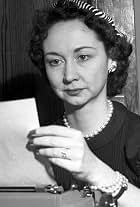
Her killer was ADAM RON PATAKdY – a CIA Mockingbird – newspaper columnist with a criminal record (attempted murder) turned evangelical Christian psychological counselor
Compilation by Alex Constantine
Reporter Mark Shaw and Rupert Murdoch’s New York Post have attempted to pin blame for Dorothy Kilgellen’s murder on the Mafia. There is no evidence to support the allegation. But there is substantial evidence connecting the CIA to her “suicide” …
RICHARD NIXON HAD A (SUPPRESSED) FILE ON KILGALLEN:
” … In the recent release of the JFK files on October 26, 2017, a file entitled “DOROTHY KILGALLEN” by Richard Nixon was released but it’s contents remain sealed due to reasons of national security.”
NIXON HAD CLOSE CONTACT WITH THE AGENCY AND CUBAN EXILES INVOLVED IN THE BAY OF PIGS INVASION AT THE TIME …
Late Night Comedian Jack Paar Revealed on his Show that Dorothy Kilgallen was a CIA Dupe:
Lee IRsrael, Kilgallen (1979)
“There had been some snide little items about her (Dorothy Kilgallen) in the columns, an occasional short profile in the magazines, and frequent strafing from television performers. Jack Paar led the pack in 1960, taking up Sinatra’s slack. That tempestuous round began when Dorothy swiped at him in the column over his impassioned support of Fidel Castro. She was violently opposed to the new Cuban leader and peppered her column with anti-Castro items, many of which appear to have been fed to her by Miami-based exiles or CIA fronts on an almost daily basis. [Jack] Paar retaliated on his prime-time, high-rated television show.”
Kilgallen Interviews Jack Ruby
Lee Israel, Kilgallen (1979)
During one of her (Kilgallen’s) visits – sometime in March, before the verdict – she prevailed upon Joe Tonahill to make arrangements through Judge Brown for a private interview with Jack Ruby.
Brown, awestruck by Dorothy, acceded readily to Tonahill’s request. The meeting room in the jailhouse was bugged, and Tonahill suspected that Brown’s chambers were as well. Brown and Tonahill chose a small office off the courtroom behind the judge’s bench. They asked Ruby’s ubiquitous flank of four sheriff’s guards to consent to remain outside the room.
Dorothy was standing by the room during a noon recess. Ruby appeared with Tonahill. The three entered the room and closed the door. The defendant and Dorothy stood facing each other, spoke of their mutual friend, and indicated that they wanted to be left alone. Tonahill withdrew. They were together privately for about eight minutes, in what may
Dorothy would mention the fact of the interview to close friends, but never the substance. Not once, in her prolific published writings, did she so much as refer to the private interview. Whatever notes she took during her time alone with Jack Ruby in the small office off the judge’s bench were included in a file she began to assemble on the assassination of John F. Kennedy.
) Eric Paddon, Dorothy Kilgallen and the JFK Assassination (2002)
Kilgallen ran one last column on the JFK assassination on September 3, 1965. It was little more than a rehash of questions surrounding the photos, and an assertion that if Marina Oswald could explain the “real story” it would undoubtedly cause a “sensation.” She closed by vowing, “This story isn’t going to die as long as there’s a real reporter alive – and there are a lot of them.”
She evidently found time to investigate one lead on her own in New Orleans. Her make-up artist for “What’s My Line?” recalled Kilgallen telling him in October that she had planned to go to New Orleans to meet someone who would give her “information on the case.” The appendix to Israel’s book indicates that the contact was either Jim Garrison or one of his associates. This would make a great deal of sense.
Researcher John Simkin on Ron Patasky and Dorothy Kilgallen’s death:
Adam Ronald Pataky was born in Danville, Illinois, on 21st May, 1935. His father owned a heating and air conditioning business [in Fairfax, Virginia and Bethesda, Maryland, a few other cities]. In 1950 the family moved to Columbus, Ohio. After high school Pataky attended Stanford University but failed to graduate.
Pataky returned to Columbus and graduated from Ohio State University with a degree in journalism in 1959. In 1961, he was hired as a film and drama critic for the Columbus Citizen-Journal.
In June, 1964, Pataky went on a trip paid for by Twentieth Century-Fox who used it to publicize three of its films: The Sound of Music, The Agony and the Ecstasy and Those Magnificent Men in Their Flying Machines. On the trip he met and began a relationship with fellow journalist, Dorothy Kilgallen. This relationship was kept a secret. In her book, Kilgallen (1979), Lee Israel gives Pataky the name of “Out-of-Towner”. Apparently Pataky went up to Kilgallen and asked her if she was Clare Booth Luce.
It has been suggested by John Simkin that Kilgallen suspected that “Out-of-Towner” was a CIA spy. She therefore told her friends this is what he said so that if anything happened to her, a future investigator would realize that he was a CIA agent with links to Clare Booth Luce.
On 8th November, 1965, Dorothy Kilgallen, was found dead in her New York apartment. She was fully dressed and sitting upright in her bed. The police reported that she had died from taking a cocktail of alcohol and barbiturates. The notes for the chapter she was writing on the assassination of John F. Kennedy had disappeared.
Some of her friends believed Kilgallen had been murdered. Marc Sinclaire was Kilgallen’s personal hairdresser. He often woke Kilgallen in the morning. Kilgallen was usually out to the early hours of the morning and like her husband always slept late. When he found her body he immediately concluded she had been murdered.
(1) Kilgallen was not sleeping in her normal bedroom. Instead she was in the master bedroom, a room she had not occupied for several years.
(2) Kilgallen was wearing false eyelashes. According to Sinclaire she always took her eyelashes off before she went to bed.
(3) She was found sitting up with the book, The Honey Badger, by Robert Ruark, on her lap. Sinclaire claims that she had finished reading the book several weeks earlier (she had discussed the book with Sinclaire at the time).
(4) Kilgallen had poor eyesight and could only read with the aid of glasses. Her glasses were not found in the bedroom where she died.
(5) Kilgallen was found wearing a bolero-type blouse over a nightgown. Sinclaire claimed that this was the kind of thing “she would never wear to go to bed”. …
Pataky left his job with the Columbus Citizen-Journal in 1980. He later worked as a artist-photographer. He also worked as a Christian counsellor. In 1993, the investigative reporter, David Herschel, discovered that “Out-of-Towner” was Pataky. In an interview with Herschel, Pataky admitted that he worked on articles about the assassination of John F. Kennedy with Dorothy Kilgallen. Pataky also confessed to meeting Kilgallen several times in the Regency Hotel. However, he denied Lee Israel’s claim that he was with her on the night of her death.
In December, 2005, Lee Israel admitted that the “Out-of-Towner” was Ron Pataky and that “he had something to do with it (the murder of Dorothy Kilgallen)”.
http://wp.local/wp-admin/post-new.php
About that lethal barbiturate cocktail:
” ,,, In an initial autopsy report, a Brooklyn medical office, as opposed to the office in Manhattan where she lived, found her cause of death to be a lethal combination of alcohol and barbiturates.
“That report was later amended to note that the barbiturate originally found– Seconal, a sleeping pill for which she had been prescribed– was, in fact, a combination of Tuinal and Nembutal, which she did not have access to.”
Dorothy Kilgallen; Reporter Cloaked in Controversy
Ron Pataky, 46 years after Dorothy Kilgallen’s death
“Addygrace” posted on Mar, 22 2011 @ 06:47 AM
(A capsule summary of his life and newspaper career is posted here. Also an allegation that Pataky killed Kilgallen at the behest of the CIA. Closing paragraph:)
“Ron Pataky today is a Christian counsellor in Columbus seeing many clients. He works both for himself and Lighthouse Christian Counselling. He tells people that he is now (in 1993) getting his PhD. What they don’t know is that he is using a diploma mill in Newburgh, Indiana called Trinity Theological Seminary. The American Council on Education knows it is a diploma mill. He also uses the CompuServe network, which has headquarters in Ohio.”
https://www.abovetopsecret.com/forum/thread677851/pg2
Pataky’s criminal history:
New Information Concerning Dorothy Kilgallen’s Mysterious Death
Ron Patky appears to have been in New York at the time of the What’s My Line? star’s death, despite denials.
INVESTIGATIVE NEWS SERVICE – MAR 5, 2022
… There was some mystery surrounding untimely death on November 8, 1965 at age 52. She had reported critically on, and was said to be writing a book about, the assassination of President Kennedy, casting doubt on the official Warren Commission explanation. …
Pataky had several brushes with the law in Columbus. He made the front page of the Columbus Dispatch in 1971 after being arrested for shooting at football player James Otis. He had previously been arrested in 1963 after an incident at a drinking party. He is said to have had confrontations at Stanford University in 1954 that led to his transferring to Ohio State, from which he graduated before meeting Kilgallen.
[CONCERNING HIS WHEREABOUTS THE NIGHT KILGALLEN’S FATAL OVERDOSE]
…. Pataky repeatedly denied being in New York at the time of her death. Pataky claims that he was in the newspaper office in Columbus, Ohio … So I decided to check Pataky’s newspaper columns about the time of Kilgallen’s death to see if they were consistent with his claim that he was in the office. Pataky was the theater and film critic for the Citizen-Journal in Columbus. The paper went out of business in 1985 but is available on microfilm. While others have looked at these columns, they seem to have missed some key facts.
I discovered that Pataky had written columns about local film and theater events in Columbus before Kilgallen’s death. The paper didn’t publish on Sundays, which would have made it easier for him to go out of town on the weekend. (It’s an eight or nine hour drive from Columbus to New York.) To my surprise, his two first columns after Kilgallen’s death mentioned a film playing in New York City that was only going to come to the Columbus several days later. But he wrote an in-depth review just two days after Kilgallen’s death acknowledging he had seen the film. In addition, it seemed strange that his columns did not mention the death of Kilgallen, whom he described as a good friend in Shaw’s book, though he did refer to New York in connection with the films.
.Here is a timeline of Pataky’s columns a few days before and after Kilgallen’s death:
Saturday, November 6, 1965—Pataky’s column is about a local production of Euripides’ Trojan Women at a Columbus theater. (This would have been submitted by Friday, November 5.)
Sunday, November 7, 1965, The Citizen-Journal does not have a Sunday edition. Dorothy Kilgallen tapes her last episode of What’s My Line? and afterward is seen by a contestant from the show sitting with a man in the cocktail bar at the Regency Hotel, where the cast, crew, and guests often went after tapings. The hotel was seven blocks from Kilgallen’s townhouse.
Monday, November 8, 1965. Pataky’s column features a review of Bunny Lake is Missing, which was playing at a movie theater in Columbus. (This could have been submitted on Friday.) Dorothy Kilgallen is found dead in bed at her home.
Tuesday, November 9, 1965. News of Kilgallen’s death hits newspapers across the country, including the front page of the Citizen-Journal. Pataky did not mention Kilgallen in his column in the two days following her death, though New York is featured in other ways. (In fact, he never addressed her death ever in the column in the coming years.) Pataky’s Tuesday column was headlined, Holiday Film Lineup Finest the City Has Seen in Years. He listed half-a-dozen films that would be playing in Columbus during the holidays, including The Pawnbroker—“A picture that sent the New York press into ecstasy—definitely one you connoisseurs will want to see.”
The November 9, 1965, Columbus Citizen Journal featured Dorothy Kilgallen’s death on the front page, but Ron Pataky’s column in the paper never mentioned her death.
The next day, Wednesday, November 10, Pataky’s column was devoted entirely to a detailed review of The Pawnbroker, which was playing in New York, but didn’t open until Friday, November 12 in Columbus. His column was titled: Watch For The Pawnbroker. It Will Go Down As A Classic. An advertisement in The New York Times confirms that The Pawnbroker was playing at the Playhouse Theater on 72nd street in New York, about seven blocks from Kilgallen’s townhouse, the week she died.
The long review makes it clear Pataky has seen the film. The Pawnbroker was about a Holocaust survivor who moves to New York, where scenes of daily life and violence in the city cause him to have flashbacks to the concentration camp. Two of the women in the film—the pawnbroker’s wife, who is killed by the Nazis, and later the woman he has an ambivalent companionship with—bear a passing resemblance to Kilgallen, insofar as both have long black hair.
Pataky observes, “Rod Steiger probably should win the Academy Award for his performance of the central figure. I only insert probably because I haven’t seen several of the pictures from which a competitor might emerge. The supporting players are strong. The screenplay is both articulate and emotional…”
The review also contains some interesting observations. Pataky writes, “We are told for the umpteenth time that hate, in any of its endless forms, breeds other kinds of hate, and that passing years do little to absolve the guilty or relieve the offender.”
More disturbingly, he adds, “The drama is one of seething discontent, which is to say it could only end in tragedy. Here, that tragedy leads to a cleansing or purification that no reviewer should attempt to describe. Suffice it to say that the torment builds until it can no longer contain itself, at which time it breaks out in violence.”
Clearly, Pataky had a strong reaction to the film. Did it break out in violence?
Why did he so strongly deny being in New York when Kilgallen died, when his columns suggest otherwise? In his November 10, 1965 column, Pataky ignored the untimely death of his friend Dorothy Kilgallen but instead wrote a rave review of a movie playing in New York that hadn’t yet opened in Columbus.
Now, it’s possible Pataky saw the movie earlier in New York or even in another city. If so, he could have been in Columbus that weekend. But the columns are also consistent with his being in New York. So the content of his columns do not 100% prove he was in Columbus that weekend (the way they would have if he had written about seeing a local play that weekend), nor do the columns rule out his being in New York City. The columns could be consistent with either scenario.
https://investigativenews.substack.com/p/new-information-concerning-dorothy
Comments